The need for asset management systems is increasing as organisations look to better control potential risks and optimise their spending. Asset proliferation, AI expectations, and budget scrutiny are all driving this change. That’s why DONOS has partnered with Starhive, an asset management software vendor. In this blog, we will dig into what is driving the greater need for asset management and the different ways Starhive can help, both standalone and in combination with Jira.
But before we do, it’s important to understand what we mean by the term ‘asset’.
The definition of an asset
The meaning of the word ‘asset’ varies significantly as different people, teams, and businesses all have unique definitions. Starhive defines an asset as anything that has value to an organisation. So this includes the traditional definition such as laptops, network devices, and operational technology like measurement devices or MRI scanners.
But it also includes non-physical assets such as licences, IP addresses, warranty documents, vendors, compliance regulations, and anything else important for your business. In Starhive’s world, a business consists of a wide variety of interconnected assets. For example, printers can have leases. Both the printer and the lease can be considered assets, as they have value to the business and lifecycles to track.
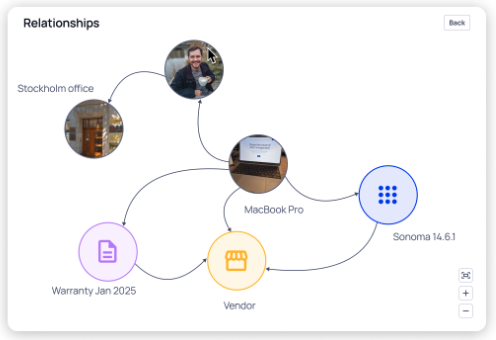
Example of different types of assets that can be stored in Starhive and linked together such as a laptop, OS, and warranty document.
Why is asset management more critical than ever?
When organisations lack a clear, accurate view of their assets, whether it’s hardware, software, or something else, they introduce risk. Security risks, financial risks from overpaying or regulatory fines, and even risks to the business from delays in delivering the services customers expect. As the number of business assets explodes, markets grow tougher, and regulations tighten, businesses are turning to asset management.
To reduce these risks, businesses need a way to track their assets so that they can make critical decisions based on reliable data. Yet far too often, incomplete asset data is stored in different systems and spreadsheets, driving the need for dedicated asset management processes and software.
If the business wants to answer questions like ‘how many of our IT assets go out of warranty next year?’ to plan their budget accurately, or ‘which location is having the most security camera failures’ to spot sites with troublesome security practices, they need an asset management system.
AI will make asset management even more vital. AI is perfectly poised to answer the types of questions above, but only if it has access to data. AI excels when it has context, which pushes the need for a centralised source of asset information. Businesses must track non-traditional assets like vendors, contracts, and risks in a single database with their traditional assets to give AI the context it needs to generate useful insights.
But many legacy tools are not equipped to provide such a centralised source of asset information.
Starhive, a modern approach to asset management
The team behind Starhive has over 20 years of experience in asset management. They began with Insight, an add-on for Jira that was purchased by Atlassian in 2020 and became Jira Assets. During this time, they learnt that every organisation has highly unique requirements for asset management. Different businesses prioritise tracking different elements of their assets depending on their company goals, risk appetites, and asset estates.
Yet most legacy asset management providers offer little flexibility with rigid definitions of what an asset is. Many tools are dedicated solely to IT and let you store IT equipment, without appreciating that IT teams often have to manage assets far beyond IT. There are also tools dedicated to the financial side of assets, and if you want to know more about the same assets, such as their GPS location, you need yet another tool.
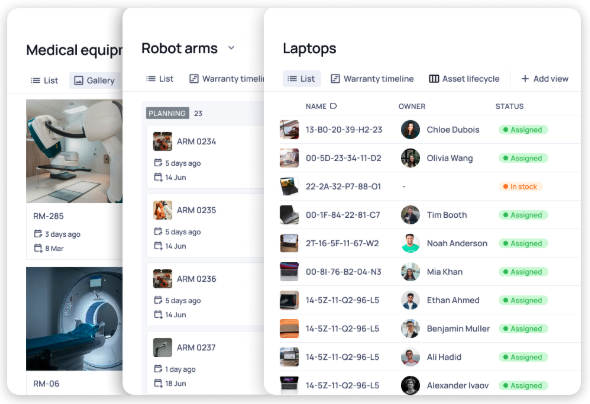
Example of various types of physical assets stored in Starhive
Starhive’s approach is to provide an open database for storing and tracking all the information about the assets you need to control. It is designed so that different teams, technical and non-technical, can access only the information they require about the same assets to help them make decisions faster.
For example, at a company that sells or rents equipment to its customers, technicians can access more technical attributes for maintenance purposes, while sales teams see more basic information, enough to have meaningful conversations with customers about renewals.
Starhive is designed for businesses to track exactly what they need and to democratise access to that information across every team that needs it. Their commitment to centralising and sharing complete data is shown with the 500+ importers they support, including Lansweeper for network scanning, Entra ID, Okta, external database providers, and more.
Starhive with Jira
The main goal of asset management is to introduce both control and additional context when work needs to be done. That’s why Starhive has a strong integration with Jira, so you can see assets in Starhive on your work items for faster resolution. The actual asset data is stored externally in Starhive, but it’s simple to access the full asset information and update certain attributes with just a few clicks from Jira.
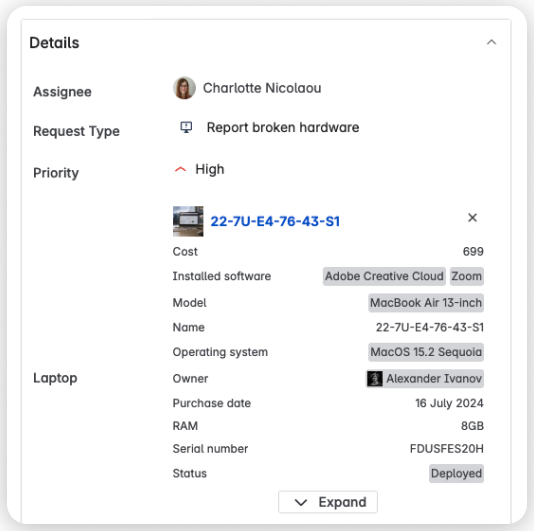
A laptop asset stored in Starhive and how it appears on a Jira work item using the Starhive custom field
This is beneficial for businesses whose processes are not all in Jira. If some teams, e.g. finance, are not using Jira, it would be very complicated for them to access Jira Assets. Yet with Starhive, finance can go directly to Starhive, while teams who are using Jira can access asset information from Jira. With Starhive, you give yourself more flexibility in how people access asset data.
Starhive can be connected to Jira Cloud or Jira Service Management via custom fields. Starhive assets can also be incorporated into Jira Service Management portal forms so that both external and internal users can connect Starhive assets to work items.
DONOS & Starhive
DONOS has partnered with Starhive to end the fragmentation of asset data, provide organisations with greater visibility and control, and help them make faster, more accurate decisions that reduce financial, regulatory, and security risks.
As both a Starhive partner and an Atlassian Solution Partner, DONOS is perfectly positioned to help you find the right way forward for your business’s asset management needs. They can provide advice on a potential solution, guidance on which assets and data should be tracked, and support in implementing Starhive and Jira integration.
If you’d like to improve your asset management capabilities, get in touch here.
FAQ
An asset is any resource that holds value for an organisation and supports its operations or its ability to earn money. That could be tangible equipment such as laptops, networking hardware, or industrial machines. It can also include intangible items such as software subscriptions, cloud environments, contracts, warranties, policies, and even defined roles and compliance frameworks.
Asset management is the structured approach to recording, maintaining, and overseeing all of an organisation’s assets. By centralising this information, teams gain clarity on what exists, where it is located, who is responsible for it, and how it is performing. This visibility supports better budgeting, lowers unnecessary spending, strengthens compliance, and improves planning across the business.
No. While devices and equipment are common examples, many important assets are digital or contractual. Software licences, SaaS tools, cloud infrastructure, supplier agreements, regulatory requirements, and structured data, such as employee or customer records, are all assets that need to be managed.
Asset management considers the full picture of each asset, including ownership, usage, location, and performance. Lifecycle management sits within that discipline and focuses specifically on the stages an asset moves through, from purchase and deployment to maintenance and eventually retirement or disposal.
Starhive can track and manage any type of asset. So Starhive can be used for IT asset management, enterprise asset management, fixed asset management, facilities management, industrial asset management, or a mix of all of them. The terminology doesn’t matter so much; what matters is what assets your business needs to manage.